
Maintenance control · BeltLabs
Conveyor belt maintenance software built around the belt record.
Plan conveyor belt maintenance from a controlled asset register, inspection findings and splice history, then return completed work, parts, photos and sign-off to the same record.
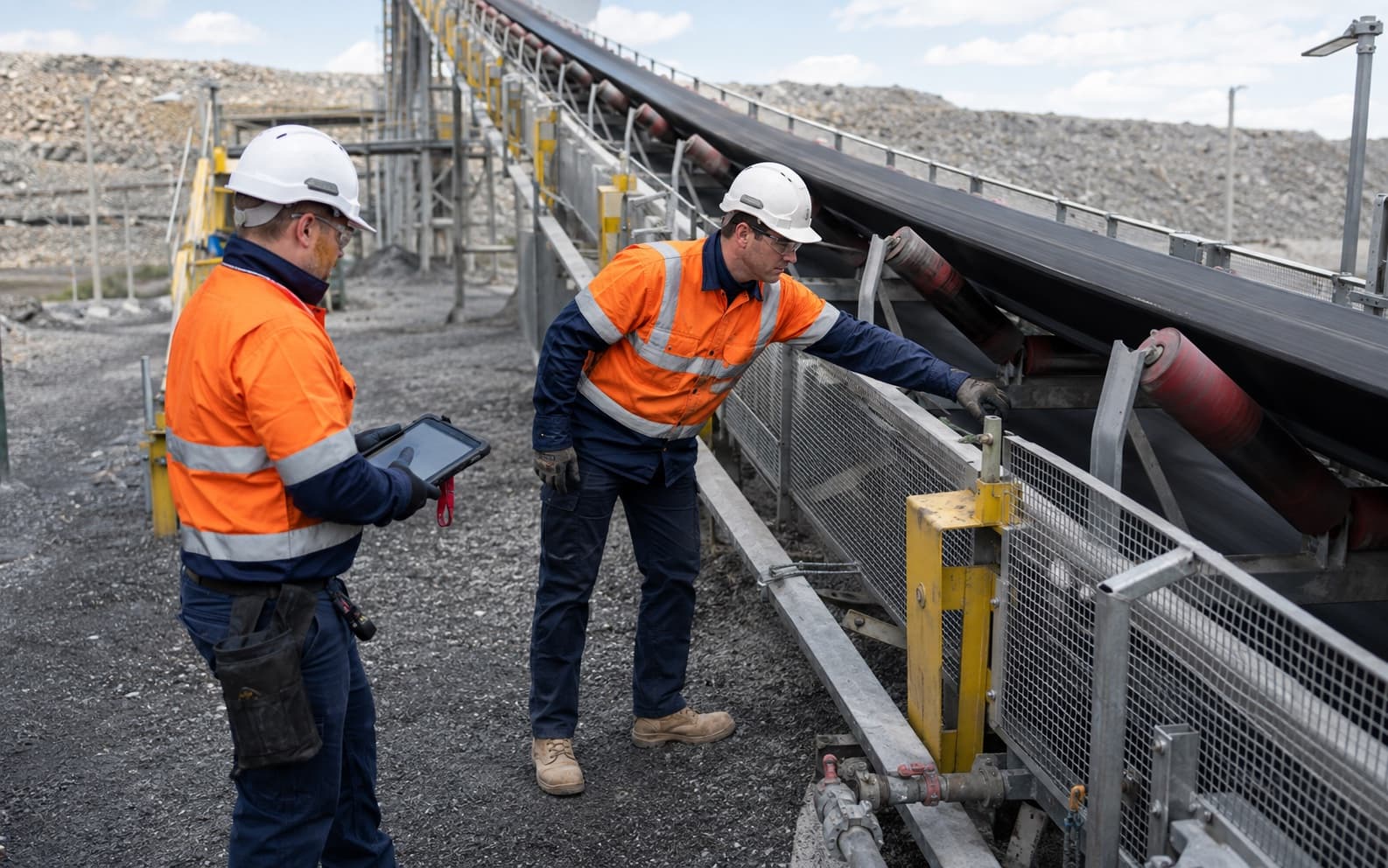
In the field
Planned belt and idler maintenance on an isolated conveyor.
Where the record breaks
General maintenance systems can hold a work order while the belt specification, individual splices, inspection evidence and service history remain split across spreadsheets, folders and contractor reports.
What changes
BeltLabs gives each conveyor a stable record and carries that context from inspection through planning, field execution, review and handback.
Workflow
One chain of custody from record to result.
Each stage keeps the accountable person, source record and next decision visible. The workflow supports the competent team; it does not replace its technical judgement.
- 01
Register the conveyor
Keep the site, route, asset code, belt construction, dimensions, material duty and operating status together.
- 02
Control inspection findings
Capture condition, severity, location and evidence against the correct conveyor before work is approved.
- 03
Plan accountable work
Assign scope, people, dates, materials, constraints and completion requirements to the work order.
- 04
Close the loop
Return parts used, photos, notes, approvals and open limitations to the asset history.
What the workspace holds
The detail stays attached to the work.
BeltLabs connects business records and belt-specific evidence without exposing the whole internal process on the public website.
- Conveyor and installed-belt register
- Splice, repair and inspection history
- Planned and corrective work orders
- Technician and contractor assignments
- Parts, suppliers and purchasing
- Field photos, documents and approvals
Customer-led implementation
Start with one workflow your team can verify.
- 01Import one site and resolve duplicate asset codes
- 02Agree the minimum belt and conveyor fields
- 03Configure one inspection-to-work workflow
- 04Run a real job from planning to handback
- 05Expand by route after the team accepts the record
Questions
Clear boundaries before you buy.
Is BeltLabs a general CMMS?
BeltLabs includes maintenance work orders, schedules, parts and records, but its operating model is built around conveyors, installed belts, splices and belt-service evidence.
Can we migrate an existing conveyor register?
Yes. Customers can map and validate their own source data before import. A bounded first site is the safest way to resolve naming, units and duplicates before wider migration.
Does BeltLabs replace condition-monitoring hardware?
No. BeltLabs manages the human and business workflow around assets, findings and completed work. It does not claim to be a belt-scanning sensor or automated vision system.
Related conveyor guidance